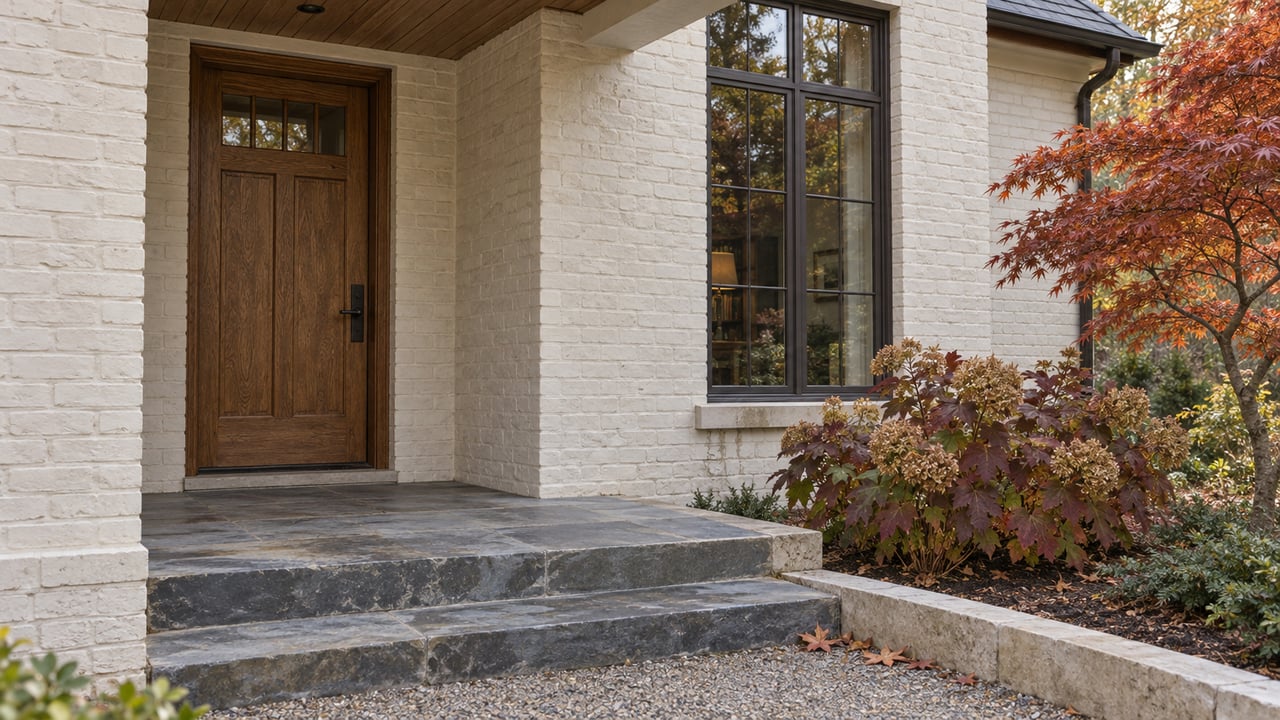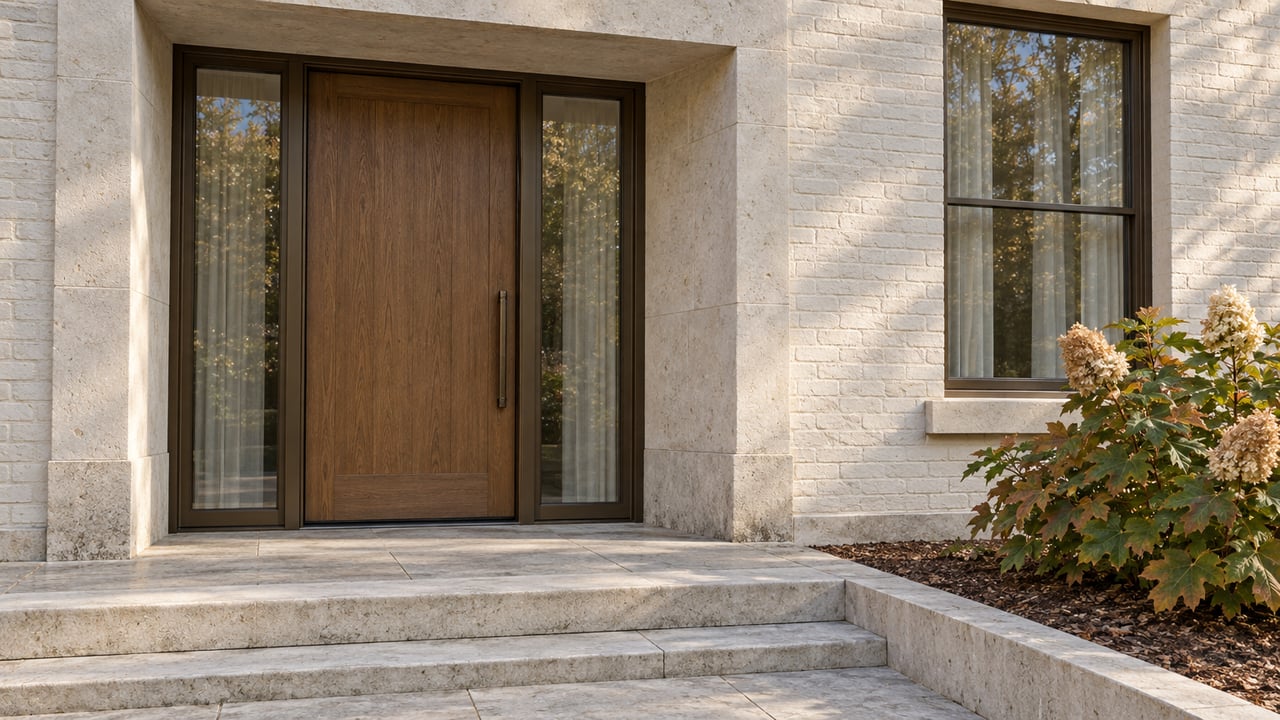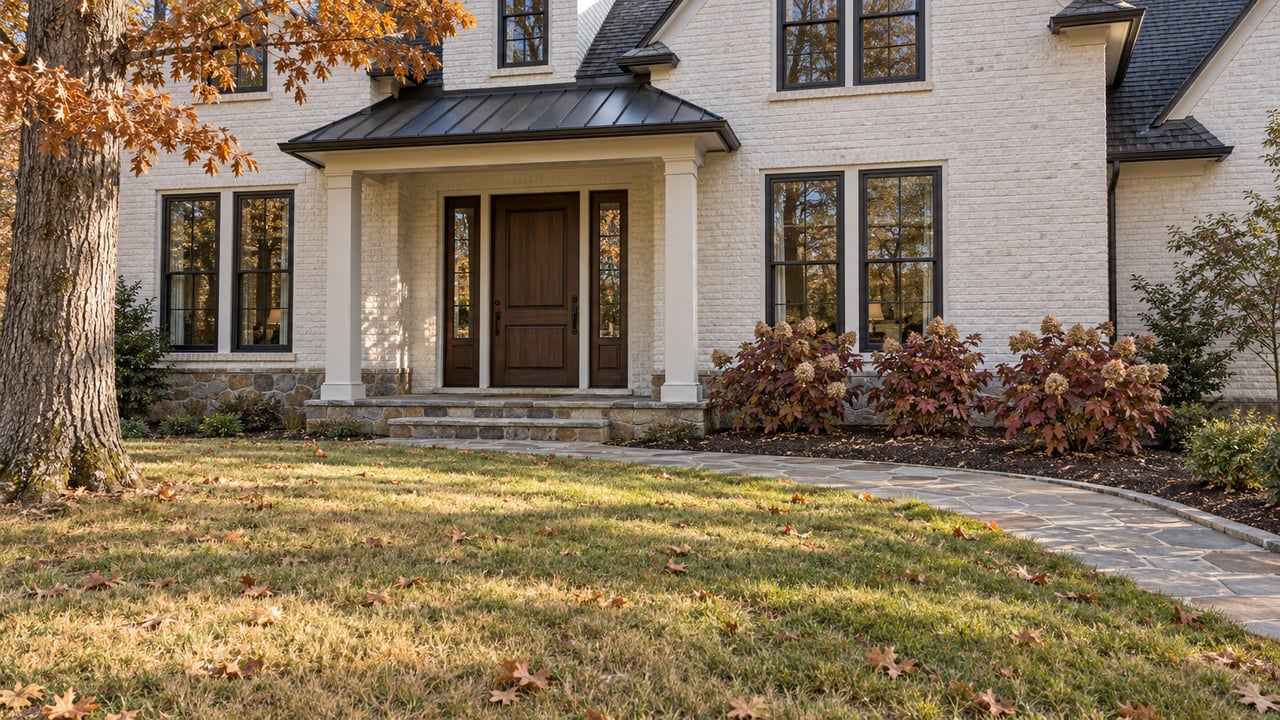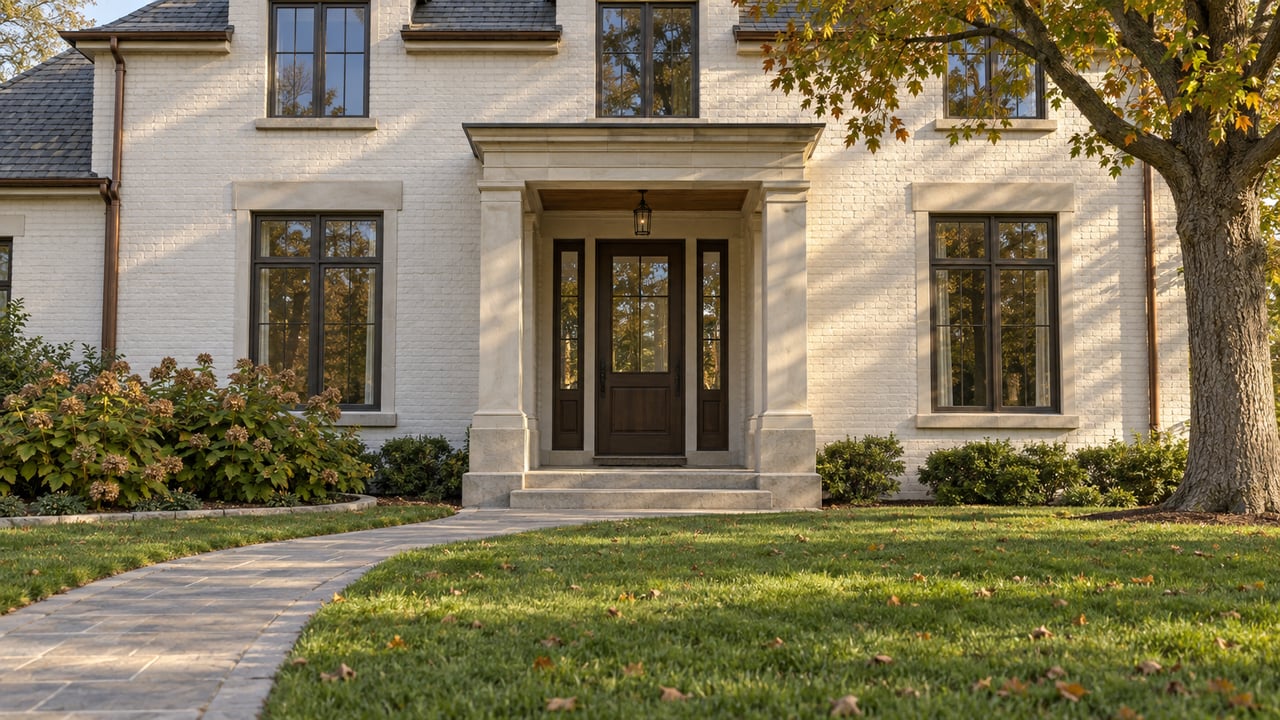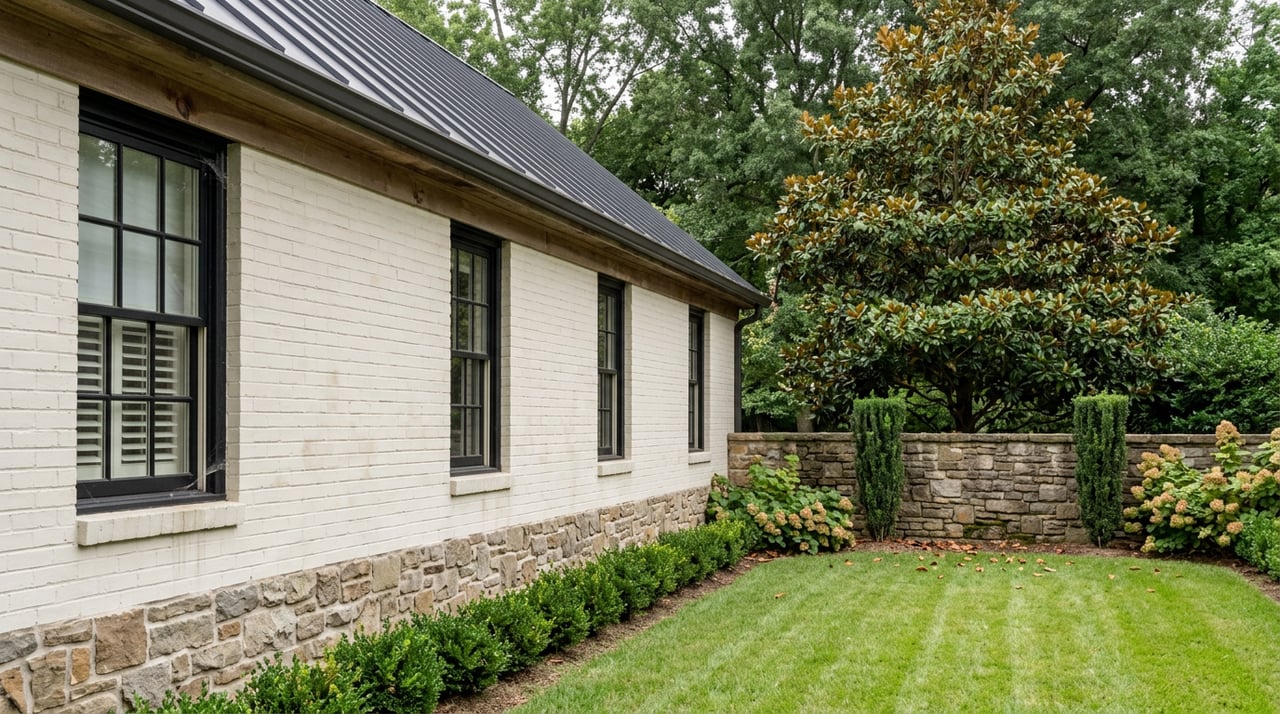
Drive down Broadwell Road on a quiet afternoon and the frontage looks the way Crabapple frontage has looked for years: detached single-family homes, mature trees, a sense of settled distance from downtown Alpharetta. Nothing about the street view tells you that two of those parcels, at 12475 and 12505 Broadwell Road, are about to hold something else entirely behind the houses. Milton's Design Review Board took up a final architectural review of the Urbandale Townhomes proposal on August 4, 2026, for three townhome structures totaling 15 units, built not on the road but tucked behind the existing single-family homes that front it. The plans call for gable brackets, board-and-batten shutters, and decorative railings in contrasting earth tones, details meant to soften a development that most people driving past would never have predicted.
The parcels sit on about seven acres split between two zoning designations, T-4 and T-2, near the Alpharetta line and adjacent to the Crabapple Crossing neighborhood. That split is the whole story. It is also the part of Crabapple that almost never makes it into a neighborhood guide.
The Word "Historic" Isn't Doing the Work You Think It Is
Buyers comparing Crabapple against other North Fulton pockets tend to anchor on the village character: the brick crossroads building, the walkable core, the sense that this is one of the older parts of Fulton County and therefore protected from the kind of change that reshapes newer suburbs. That instinct is not wrong about the past. It is incomplete about the mechanism that governs the future.
Milton's Design Review Board reviews new construction, site development, and significant alterations across the city's overlay districts, including the Crabapple Crossroads portion of the Northwest Fulton Overlay. But that review requirement, tied to Land Disturbance Permits and Building Permits, applies to essentially every kind of development except one: single-family detached dwelling units. A buyer purchasing a standalone home in Crabapple is, in effect, buying into a process that never has to clear the same design gauntlet a townhome project does. That sounds like protection. It is actually the opposite of protection for what happens around that home, because the land behind or beside it is governed by a completely different set of rules, ones written into the zoning map itself rather than into any historic designation.
Four Zones, One Code, Very Different Ceilings
The mechanism is the Crabapple Form-Based Code, which maps the district into transect zones rather than conventional use categories. The Smart Preservation summary lists the T-3, T-4, and T-5 density figures below.
Zone | As-of-right density | Maximum density via TDR |
|---|---|---|
T-3 | 3 building units per acre | 6 building units per acre |
T-4 | 5 building units per acre | 9 building units per acre |
T-5 | 9 building units per acre | 14 building units per acre |
The transfer ratio runs two bonus units for every one TDR credit purchased. That means a one-acre site in a T-4 zone, like the kind of parcel sitting quietly behind Broadwell Road frontage, can go from 5 units to 9 units simply because someone elsewhere in the city sold the right to build.
How a Horse Farm Becomes Someone Else's Density
That "someone elsewhere" is usually a large-acreage property owner, and this is where Crabapple's zoning code quietly intersects with Milton's equestrian identity. The TDR program was built, according to the city's own Zoning Manager Robyn MacDonald, to encourage owners of five-plus acre lots, many of them horse farms, to place a permanent conservation easement on their land in exchange for TDR credits they can sell in a private transaction. Once recorded, the easement restricts future development on the sending property. A developer somewhere in the Crabapple or Deerfield form-based code area gets to build denser than the code would otherwise allow.
This is not a hypothetical pipeline. It is the literal financial link between the rural viewshed north Fulton buyers say they value and the density showing up behind village-adjacent frontage. The land stays open. The development rights do not disappear. They move.
The City's Own Answer: Large Lot Incentives
Milton has been trying to slow the supply side of that pipeline for the past two years. The city defines a "large lot" as any parcel three acres or larger, and in October 2024 staff brought a set of proposed incentives to City Council aimed at giving owners of those parcels a reason to keep them intact rather than subdivide and sell. Working through much of 2025 with the Milton Equestrian Committee, staff narrowed the list to proposals like an expedited administrative approval process for covered riding arenas on ten-plus acre properties, and similarly streamlined approval for home-based businesses run out of an accessory structure. Council explicitly rejected other ideas along the way, including short-term rentals and accessory structures placed in front yards, and declined to create a separate "hobby farm" use category.
By an October 2025 Council meeting, Interim Community Development Director Diana Wheeler had outlined six of the original proposals still advancing, with the next step being further refinement and input from Milton's Planning Commission before any final Council vote. As of this writing, the Large Lot Incentives program remains in that in-between state: a clear policy direction, not yet a finished ordinance. For anyone evaluating acreage in or near Crabapple, that in-between status matters. The incentives are designed to make holding a large lot more attractive, which only makes sense if the alternative, subdividing or feeding the TDR program, is currently the more attractive option for some owners.
What to Actually Check Before You Write an Offer
None of this requires a rezoning fight or a public records request most buyers would think to make. It requires asking a short list of questions before falling in love with a lot:
- What transect zone covers this parcel, and what covers the parcels immediately behind or beside it
- Whether any adjoining large-acreage parcel has already placed a conservation easement under the TDR program
- Whether the parcel sits inside the District at Mayfield, which Milton's District at Mayfield page says covers parcels off Broadwell Road, Charlotte Drive, Mayfield Road, and Mid Broadwell Road
- What the Design Review Board has reviewed or approved nearby in the past twelve months, since that record shows what density the code is actually producing rather than what it theoretically allows
Milton's Community Development Department can confirm the zoning designation on any specific parcel, and the Design Review Board's meeting agendas are public record. The information is not hidden. It is simply not the first thing most buyers know to ask for.
A Few Questions Worth Asking
If I buy a single-family home in Crabapple, does the Design Review Board have any say over my own renovation? Generally no. The DRB approval requirement applies before Land Disturbance or Building Permits are issued for most developments, but single-family detached dwelling units are specifically exempted from that review.
Does a nearby horse farm affect what can be built next to my home? It can, in either direction. If that farm's owner has placed a TDR easement on the land, the easement restricts future development there. The credits issued in exchange for that easement can be used to add density elsewhere in the receiving zones, which may or may not be your immediate surroundings.
Is the Large Lot Incentive program already in effect? Not yet in final form as of this writing. City Council has signaled support for a narrowed set of proposals following work with the Milton Equestrian Committee, but the measures were still headed to the Planning Commission for additional input as of the most recent Council discussion.
Zoning maps are public documents, but they reward the kind of reading that takes horse country as seriously as it takes a kitchen renovation. If you are weighing a Crabapple property against something in Milton's broader large-lot corridor, or trying to understand what a specific parcel's transect designation actually protects, Katharine McQueen works this exact intersection of North Fulton real estate and equestrian land every day. Let's connect before you write the offer, not after.
This article is general information, not legal, tax or financial advice. Consult a qualified professional about your situation.